
Psychics Among Us? Or Simply Us?
What if the development of human perception (often called “psychic ability“) has nothing to do with rare DNA or special genetics?
Questions about extraordinary perception often lead to speculation about ancestry, inherited gifts, or special bloodlines. A closer look at Ingo‘s family history suggests a different possibility.
What emerges from genealogical and DNA research is a familiar American story: immigrant roots, early settlers, and an ordinary family history.
Ingo‘s father was a first-generation American from a Finnish-Swedish immigrant family. His mother‘s line traces back to early American settlers with British, French, and German roots.
Family stories also included accounts of Indigenous ancestry several generations back, a tradition that finds some support in DNA testing, which shows a small amount of Indigenous ancestry.
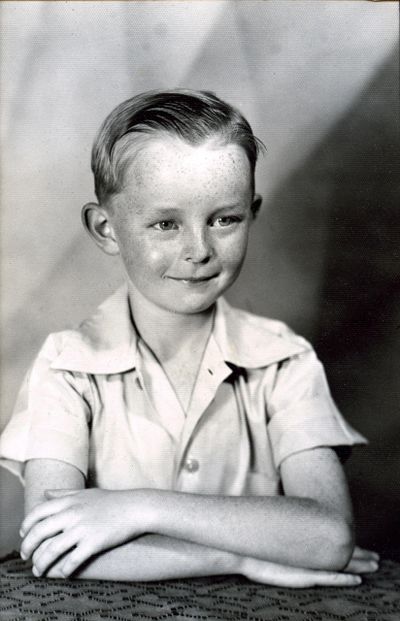
What proves more interesting than ancestry, however, is family culture. While his parents worked, Ingo spent much of his early childhood in Telluride, Colorado, in the care of his grandmothers, Maria and Anna.
Both women were shaped by hardship, loss, and perseverance. Maria was widowed young, and supported her family by running a boarding house. Anna‘s family scattered after a series of deaths and financial struggles, leaving her largely to make her own way in the world. She eventually operated a boarding house and a restaurant.
Neither woman would have described herself as “psychic,“ nor do their stories suggest a hidden bloodline. Yet both lived in communities and circumstances where paying attention to intuition, hunches, unusual experiences, and the subtle signs of daily life was often part of getting by. These were perspectives Ingo absorbed firsthand while growing up in their care.
Telluride itself reinforced these habits. Reflecting on his childhood, Ingo later wrote that “intuition and prediction carried great weight” in the mountain town where he grew up. Life in the high Rockies required people to pay attention to weather patterns, avalanche conditions, changing skies, and countless subtle cues in the landscape. Doing so was often a matter of safety and survival. These were not considered extraordinary abilities, but practical forms of awareness developed through experience, necessity, and close observation of the world around them. It was within this environment that many of Ingo‘s earliest ideas about perception first began to take shape.
If he inherited anything, it may have been less about genetics and more about a way of seeing the world: a willingness to observe closely, remain curious, and pay attention to experiences that others might overlook.
In that sense, the more compelling story is not one of ancestry, but of influence.
Interesting family history, certainly.
But no hidden “psychic bloodline.”
Ingo himself was very clear about this.
A 1978 interview published in Advance! offered another revealing perspective on how Ingo approached his abilities. The article noted:
“He does not claim to be controlled by extraterrestrial beings or ‘spirit guides,’ but takes responsibility for what he does.”
This distinction matters. Whatever the nature of his experiences, Ingo was not presented as someone whose actions were directed by outside entities. The emphasis was on his own participation, awareness, and responsibility.
In the section “The Conventional Question of Who Is ‘Psychic‘ and Who Is Not“ from his essay Awareness and Perception vs. Status of Individual Realities, he challenged the assumption that unusual perceptual abilities belong only to a rare gifted few. Once attention becomes fixed on the supposedly gifted, he suggested, it quietly shifts away from the larger question of human potential itself.
In that same 1978 Advance! interview, Ingo expressed one of his goals in his own words:
“This has been one of my goals: to rehabilitate the understanding that everyone has these abilities, no matter how suppressed, no matter how misunderstood.”
Read the full 1978 Advance! interview with Ingo Swann→
These capacities were never, in his view, the product of elite ancestry or special genetics. What mattered most was belief, disciplined practice, curiosity, a broader worldview, and the willingness to pay close attention to one's own experience.
The question is not whether there are psychics among us.
The deeper question is whether the capacities we call “psychic“ are part of being human ... and whether most of us simply never explore them.
The real gift was never in the DNA.
It is in the belief that more is possible.
The dedication to explore.
The curiosity to question.
And the willingness to practice.
Directory
Context

The Context section offers a deeper look at Ingo’s life, ideas, and intellectual framework, providing context for his creative work and research. It brings together biographical material, influences, and key principles that shaped his thinking.
It also includes information on his archives, legacy, and the preservation and interpretation of his work within a broader historical and cultural context.
Works
The Works section brings together Ingo’s books, writings, and visual art. Titles such as Everybody’s Guide to Natural ESP, Penetration, and The Great Apparitions of Mary reflect the range of his thinking, from practical instruction to deeper explorations of perception and consciousness.
It also includes his paintings and symbolic imagery, showing how his creative work developed alongside his research.
CRV
Explorations
Explorations
The CRV section traces the development of Controlled Remote Viewing (CRV), from Ingo’s early perceptual experiments in the 1970s to its refinement as a structured, multi-stage method during his work at Stanford Research Institute (SRI).
It includes his original writings, manuals, and examples, offering a clear view of how the method was developed and how he understood it as a natural human capability.
Explorations
Explorations
Explorations
The Explorations section brings together Ingo’s investigations into planetary environments, UFO/UAP phenomena, and non-human intelligences. These experiences emerged as he pushed perception beyond familiar limits and explored how awareness responds in unfamiliar contexts.
It includes writings and accounts that place these observations within his broader research.
